Wednesday, July 19, 2023

Tevin Campbell's Music Career Is Dead πŸͺ¦

The world was first introduced to the lamentable Tevin Campbell at the age of 12½, making his debut on Quincy Jones' single "Tomorrow (A Better You, Better Me)" which reached number one on the Billboard Hot R&B/Hip Hop Singles chart in June of 1990.

Campbell's first solo hit was "Round and Round", which charted at number 3 on the R&B chart in November 1990 and 12 on the Billboard Hot 100 in April 1991. "Round and Round" was produced by Prince and was featured in Prince's film Graffiti Bridge.

Campbell has released platinum-selling albums like his self-titled debut T.E.V.I.N. and the follow-up I'm Ready. His songs, "Tell Me What You Want Me to Do", "Can We Talk" and "I'm Ready" all reached the Top Ten on the Billboard Hot 100. He even appeared on television shows The Fresh Prince of Bel-Air and Moesha.

Not to mention, he voiced Powerline from the Disney film A Goofy Movie. He performed the songs "Stand Out" and "I 2 I" for the soundtrack. It's because of this role that Campbell has seemingly cemented his "legacy". However, this is NOT the case! Tevin Campbell may NOT have finished his career in the music industry in a traditional sense, but he created a legend through the anthropomorphic Michael Jackson remake in A Goofy Movie.

Despite, this his career is still dead as a doorknob. No question about it. A Goofy Movie only helped save his career by an inch. If that. So what killed Tevin's music career?

There are several factors that have been suggested as contributing to the decline of Tevin Campbell's career. Some of these include:

  • 1. Voice changing: Campbell's voice went through a significant change during puberty, which meant that he could no longer hit the high notes that were his signature sound. This ultimately affected his popularity and appeal to audiences.


  • 2. Changing musical landscape: In the late 1990s, the music industry underwent a shift towards more hip-hop and R&B styles, with artists like Usher and Trey Songz gaining popularity. Campbell's style of music, which was more influenced by traditional R&B and soul, became less in demand.


  • 3. Lack of strong management: Campbell also faced management issues, including changing management teams and a lack of support and guidance, which impacted his career trajectory.


  • 4. Personal struggles: Campbell has talked about dealing with personal challenges, including addiction and legal issues, which may have also affected his ability to focus on his career.


Maybe some of those factors as well include the fact that he was nominated five times for a Grammy and won NOT one! πŸ˜ƒ 🀣 πŸ˜‚ 

Seriously though, it's pretty sad that he got into the business so young and eventually got overshadowed and surpassed by almost every male R&B act of the time. His 1996 album, Back to the World, straight out flopped.

His 1999 self-titled album did just the same. Deep down Campbell must have known it was over for him as far as music was concerned. So what does he do?

He goes an gets himself arrested in July of 1999, after trying to get some head from an undercover cop in children's Elementary School district. Pedophile perhaps? At least the cop was an adult. This happened during a sting operation in Van Nuys, California. Campbell was definitely in the wrong place at the wrong time. There had been numerous complaints from the public about cruising and solicitation. According to police reports, Campbell was also in possession of a small amount of marijuana at the time of his arrest.

In that moment, his "boy-next-door" image was squashed by the po-po who caught a pot head trying to get some oral. Coming from the entertainment business at such a young age, who knows what other drugs Campbell has done or what other bad things he's done that never made the news. These Hollywood guys and gals are pieces of crap. It's ridiculous and un-called for that some of the most important and successful people in this world carry on the way they do. Without expectations of consequences. They aren't just despicable. They are just horrible people. Tevin being no acception.

During 2000, Campbell stayed out of the public eye. In 2001, they released the compilation album, The Best of Tevin Campbell. Which they usually do at the end of someone's career πŸ˜‰.

What Campbell did in the entertainment industry from 2002 to 2021? NOTHING! Yet, in 2022 he hops himself on a podcast to come out as gay to the world. Final nail in the coffin? ⚰️ 

Tevin Campbell's music career might be dead but homophobia certainly is not. There are homophobes out there just as ignorant as Campbell. Their hatred? Well intact.

Although, Campbell stated that he came out to his family in private during the early 2000s sometime after the arrest happened. For years, people have speculated with little to no proof. Maybe Campbell got as sick as he looks and decided to set the record straight for himself.

Yes, Campbell has continued to perform, indicating that while his mainstream popularity is completely gone, he still has a dedicated fan base despite not being Chris Brown or a rapper. That's the story! ✌️ 


Monday, July 3, 2023

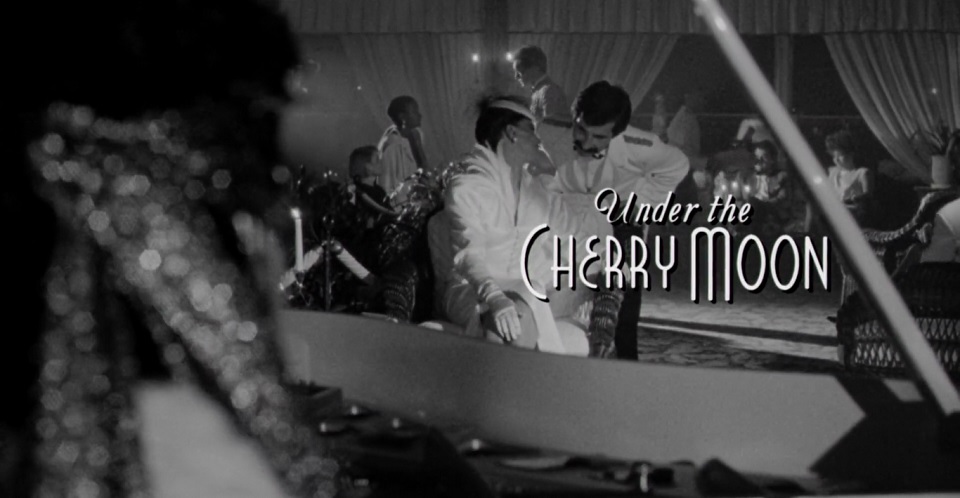
Do U Lie?: A Defense of "Under the Cherry Moon"


It's July 3, 2023. Tomorrow will be the national holiday "4th of July" in the states. Yesterday was July 2. That was the date that the film, Under the Cherry Moon was released in 1986, thirty-seven years ago to date. Thus, celebrating its 37th Anniversary since being released. This article is being written, to weigh in on the often harsh criticism of an '80s box office flop. The negatives and the positives will be evaluated.


The Negatives: What Went Wrong


Under the Cherry Moon was released, coming off the heels of Prince’s so called masterpiece Purple Rain. It was swiftly panned mostly for not being the sequel to Purple Rain, just as much as it was for being misunderstood. When it came time for awards given out for the worst films, Under the Cherry Moon walked away with five, including a tie with Howard the Duck for worst picture. A night of dissatisfaction at the 7th Annual Golden Raspberry Awards held at the legendary haunted Hollywood Roosevelt Hotel in March of 1987.
The film was also nominated for an award for "Worst Picture" at 1986's 9th Stinkers Bad Movie Awards.


Much like The Wiz did for Diana Ross and Michael Jackson's acting careers on the big screen, Under the Cherry Moon is more or less the movie that killed Prince’s viability as a screen icon. Prince definitely should have had more movie roles and been a bigger star in film that what he turned out to be. The potential was there.

After its failure, Prince seemed to lose interest in the filmmaking process, possibly because he found it difficult to reconcile his one-man-band approach to creating music with the filmmaking process in which countless of hands are required to help create even the most individual of visions.
In 1990, he finally gave everyone the “Purple Rain” sequel they had been clamoring for, but the result, Graffiti Bridge (1990), was uniquely nothing like its predecessor.

Sadly, Prince never acted in or directed a feature film again after Graffiti Bridge. Not counting any direct-to-video movies, television shows or concert films where he played "himself".

Under the Cherry Moon faced several challenges that contributed to its lackluster performance at the box office and mixed reception among audiences and critics. Here are a few factors that may have influenced its underwhelming performance:

  • 1. Prince's Unique Style: Prince was primarily known as a musician, and his foray into filmmaking with "Under the Cherry Moon" might have been seen as unconventional or unexpected. The film's stylized black-and-white cinematography and eccentric storytelling approach may not have resonated with mainstream audiences, who were more accustomed to traditional narrative structures at the time. This is what Warner Brothers was afraid of from the start. Thus it was agreed that the film would be shot on color stock but processed into black and white in post-production.

  • 2. Mixed Critical Reception: The film received predominantly negative reviews from critics upon its release. Some criticized the film's plot, viewing it as convoluted or lacking substance. Others found fault with Prince's acting and directorial choices. Negative reviews can significantly impact a film's success, as they can deter potential viewers from watching it.

  • 3. Limited Marketing and Distribution: The film's marketing campaign may not have effectively conveyed its unique appeal or reached its target audience. Additionally, the distribution strategy might not have been extensive enough to garner significant attention or attract a large number of viewers.

  • 4. Competition: "Under the Cherry Moon" was released during a competitive period at the box office, with other high-profile films capturing audiences' attention. Tough competition from other popular films can make it challenging for a smaller or niche film to gain traction and draw in audiences.

  • 5. Lack of Commercial Appeal: The film's artistic and unconventional nature may have limited its appeal to a broader audience. Its black-and-white cinematography and stylistic choices, while visually striking, might not have aligned with the mainstream taste at the time.

The Positives: What Went Right

The film marked Prince's directorial debut, who also wrote and starred in the movie. There's a positive. It also marks another debut, that of its female lead Kristin Scott Thomas in her feature film debut. There's another positive. Prince was always getting careers started and bringing new talent into the industry to work with him.

Thomas as Mary

Under the Cherry Moon is known for its stylized black-and-white cinematography, which gives the film a classic and timeless feel. Note that the film was shot in color. Like Dorothy stepping into Oz from her grey Kansas home, the audience never gets to see the true scale of the magnificent costume pieces worn by the cast as well as other interesting aspects of the film until glancing at still pictures and principle photography in full color. Aside from photographs, none of the color footage has yet emerged with the exception of the music videos for "Mountains" which is the same as the end credits sequence in the film but kept in its original colored format for the video version. Making the film even more magical.


Prince's music is also a significant contribution which makes the film great. With several original songs featured throughout, including the popular number one United States hit, "Kiss". The music adds an additional layer of emotional depth and enhances the romantic atmosphere of the story. The movies soundtrack album, Parade, sold over a million copies and achieved platinum status in the United States, United Kingdom, the Netherlands and in France.

Something else positive that came from the making of the film was that Prince gained a new musical collaborator. Jazz keyboardist/composer-arranger Clare Fischer, experienced his first of many recorded collaborations with Prince due to the film.

Parade was named one of the best albums of 1986 by The Village Voice and NME magazine, who named it their Album of the Year. Parade was released on March 31, 1986 to acclaim from music critics, who viewed it as a creative comeback after the critical disappointment of Around the World in a Day.


Although the film received mixed reviews upon its release, it has gained a cult following over the years, largely due to Prince's involvement and the unique blend of musical and cinematic elements with fans appreciating its unique aesthetic and Prince's creative vision.

Despite its initial reception, the film remains an interesting piece of Prince's artistic legacy and a representation of his creative vision beyond his musical endeavors.

The film's legacy itself has evolved beyond its initial reception, and it is now regarded as an intriguing part of Prince's artistic journey.

Conclusion


Overall regardless of anything negative anyone has to say about UTCM, it is a pretty decent film. It may not fit everyone's criteria for "the perfect film" but it is definitely worth a watch. It holds the audience to a solid viewing experience nonetheless. Especially for those who have never had the opportunity to see the film. In a lot of ways, it is better than Purple Rain. For sure Graffiti Bridge can't hold a candle to it. The film's contemporaneous negative reception had to have been due to people expecting it to resemble Purple Rain. The better option would be to have accepted this film for what it was and made educated remarks based off of that alone! With that being said the film shows considerable effort and that's why
 it's memorable and loved.

Check Out The Audio Companion of this article on our YouTube channel: https://youtu.be/q6M7y6vxh5g

Sunday, June 11, 2023

The Career of Disney Icon Jasmine

In the entertainment business, cartoon characters are treated as real celebrities and public figures with full careers and accolades to match.


Jasmine is an animated character who is widely known for her supporting role in the Disney classic Aladdin (1992). Fictionally speaking, as Princess of Agrabah she is the daughter of The Sultan (her father). Not a bad title to have for starters. She is the sixth Disney Princess and the franchise's first non-European member, as well as its first West Asian and or Arab princess. Due to this, the character is credited with introducing racial diversity to Disney's princess genre. Unlike most of Disney's princesses, Jasmine is a supporting character in her own film, taking the secondary role of the love interest.

Jasmine approaching Jafar in Aladdin 1992.

Disney's 31st Disney animated feature film being its fourth produced during the Disney Renaissance, marked Jasmine's debut into the entertainment industry and mainstream media. Aladdin was released on November 11, 1992. It received positive reviews from critics. It was a commercial success, becoming the highest-grossing film of 1992 with an earning of over $504 million in worldwide box office revenue. Upon release, it became the first animated feature to reach the half-billion-dollar mark and was the highest-grossing animated film of all time until it was surpassed by The Lion King (1994).

Jafar gives Jasmine a crown

She was not originally intended to play a significant role within the film, however this changed during production when her character value was strengthened. Becoming more important, Jasmine ultimately depicts a different type of Disney Princess, being rebellious against the royal life and the social structure. Mark Henn worked diligently with the process of her character development within the film from Disney-MGM Studios in Florida.

Jasmine gets zapped and trapped

Although, she initially had at least one song cut from the film, she ended up performing the duet, "A Whole New World", with Aladdin. Now known as film's signature, the song was created by Alan Menken with lyrics from Tim Rice. The ballad serves as both the film's love and theme song.

Jasmine and Aladdin riding the Magic Carpet

The song garnered an Academy Award for Best Original Song at the 65th Academy Awards and a Golden Globe Award for Best Original Song at the 50th Golden Globe Awards. "A Whole New World" also won the Grammy Awards for Best Song Written Specifically for a Motion Picture or for Television at the 36th Annual Grammy Awards, as well as Song of the Year, the only Disney song to do so (as of 2023). In the same year, the version sung by Peabo Bryson and Regina Belle was also nominated for Record of the Year and Best Pop Performance by a Duo or Group With Vocals, winning the latter. Also reaching number one on several charts including the US Billboard Hot 100.

Jasmine in a giant hourglass

The song helped the soundtrack album become one of the best-selling soundtrack albums to an animated film, with 3 million copies sold in the United States alone. The song "Call Me a Princess" was intended for Jasmine and was one of the Menken and Howard Ashman demos that never made the final film score. A cover version was recorded by actress/singer Kerry Butler and released on her first solo album, Faith, Trust & Pixie Dust in May 2008.

Aladdin: the Series airing on the
 Toon Disney channel

Following the success of Aladdin, Jasmine appeared in Disney's Aladdin: The Series. Though, Jasmine was not a solid fixure within the series. Being counted absent for twenty-two episodes out of eighty-six throughout the shows three season run from 1994 to 1995. The series won four out of the seven Daytime Emmy Awards it was nominated for having premiered four months before Return of Jafar.


Jasmine had her very own home videos released during this time. The Greatest Treasure (June 6, 1995), Jasmine's Wish (June 6, 1995), Magic and Mystery (February 27, 1996) and True Hearts (February 27, 1996) respectively. Each release featured two episodes from the series centered around Jasmine in the plot. Others were released in 2005 and further.

4 of Jasmine's VHS releases

The sequel to the '92 film, The Return of Jafar (1994), was released on May 20, 1994 in North America, it was the second Disney animated film sequel after The Rescuers Down Under (1990) and the first Disney direct-to-video animated film, and marked the first American direct-to-video animated film. In the United States, more than ten million copies were sold, ranking among the top 15 top-selling videos of all time (at the time). Jasmine sung two songs for the film, "Nothing in the World (Quite Like a Friend)" with Genie and Aladdin and "Forget About Love" with Aladdin and Iago. The sequel's success removed what Los Angeles Times described as "the low-quality stigma" from direct-to-video, and caused Disney, Universal Pictures, and other studios to release more direct-to-video films.


Aladdin and the King of Thieves, released in 1996 direct-to-video served as the second sequel to the 1992 film Aladdin, and serves as the final chapter and installment of the Aladdin Disney franchise. Jasmine sung the new duet, "Out of Thin Air" with Aladdin for the film.

Though this film serves as the series finale of the television series, the characters later appear in a 1999 crossover episode of the television show Hercules: The Animated Series, titled "Hercules and the Arabian Night", which premiered as a television special.


In 2000, Disney launched its Disney Princess media franchise. Jasmine was announced as a founding member of the club. The original 8; included Jasmine, Snow White (1937), Cinderella (1950), Aurora (1959), Belle (1991), Pocahontas (1995) and Mulan (1998).

The original 8 Disney Princesses


Jasmine finally got her chance to star in her own feature film in 2007 with the release of the home video Disney Princess Enchanted Tales: Follow Your Dreams. It was the first and only film released for a planned Disney Princess Enchanted Tales series of direct-to-video films, each featuring new stories about the Disney Princesses. Jasmine co-starred opposite Disney Princess Aurora from Sleeping Beauty (1959). Her own segment in the film was called More Than a Peacock Princess. Jasmine sung two new songs for the film including; "Peacock Princess" and "I've Got My Eyes on You".

Disney Princess Enchanted
Tales: Follow Your Dreams
DVD cover

Initially, after the release of Follow Your Dreams, there was planned to be an entire series of Enchanted Tales direct-to-video film installments. However, after DisneyToon Studios president Sharon Morrill stepped down in June 2007, and the animation studio units under the Walt Disney Company underwent into a corporate restructuring as the Pixar leadership assumed more control, the film series was cancelled. Also, Follow Your Dreams suffered poor sales.


Through it all Jasmine has maintained a distinctive sense of style, beauty, class and even sexuality that is unmatched. It reflects her bold and confident attitude.


Her fashion and style can be described as a blend of traditional Middle Eastern and modern styles. Her outfit consists of a cropped top with a jewel neckline and puffy sleeves, harem pants, and gold slipper-like shoes. She also wears gold jewelry including earrings, a necklace, and bracelets.


Jasmine's signature outfit is turquoise, which complements her dark hair and eyes. She is often seen wearing a sheer blue veil that covers her hair and sometimes her face. Her style also features intricate patterns and embroideries, as well as luxurious fabrics such as silk and velvet. She is also celebrated for her beauty and style, which has inspired countless fashion lines and beauty products.

Overall, Jasmine's fashion and style are characterized by elegance, grace, and a hint of rebellion.


She is also seen as a strong and independent woman who is not afraid to stand out from the crowd and be true to herself. Jasmine's determination to live life on her terms and to break down traditional gender roles make her a feminist icon. Jasmine has become a symbol of empowerment for women and has encouraged young girls to pursue their dreams without fear of societal expectations.

Overall, she has been inspirational and has broken barriers and redefined what it means to be a strong, independent woman in modern day popular culture.

Listen to the Audio Companion Here:


Thursday, May 18, 2023

Static Shock: Culturally, Historically, and Aesthetically Significant

Static Shock (also known as Static Shock: The New Kid) was an american superhero animated television series based on the Milestone Media/DC Comics superhero Static. It premiered on September 23, 2000, on the WB Television Network's Kids' WB programming block. It's a show that was and remains ahead of its time in many respects.

At a time when cartoons were not expected or encouraged to tackle real-life issues, Static -- much like the original comic character -- dove straight toward them. Whether those issues be gang and gun violence, homelessness, bullying, racism, mental illness, bigotry, or drugsStatic Shock included these elements in the plots of many of it's 52 half-hour episodes.


The show revolved around Virgil Hawkins (voiced by black actor and comedian Phil LaMarr), a 14-year-old male of the African diaspora,  who uses the secret identity of "Static" after exposure to a mutagen gas which gave him electromagnetic powers. Making history, it was the first time that an African-American superhero was the titular character of their own broadcast animation series. An important factor is the landscape of cartoons at that time. When Static Shock first premiered, cartoons with lead characters that were African American were not very common. The Proud Family and Fillmore are exceptions, but as a whole, there were not many shows that allowed for characters of color to shine, and that's what made Static so important. For superhero fans that were watching TV, Virgil was a character that they could relate to and aspire to be like. They saw him being worthy of standing with the greats. That had always been the point of the Milestone Comics he originated from: to make heroes for people who didn't see themselves very often in media.


The show made sure not just to entertain the kids watching, but also try to educate them a little. As such, one of the issues the series touched on was representation.

The episode that meaningfully explored this topic is Season 3's third episode "Static in Africa," which starts with Virgil Hawkins and his family taking a trip to the aforementioned continent. Specifically, the Hawkins family visits Ghana where they meet the local hero Anansi. The episode touches on Pan-Africanism and ethnic identity alongside a plot to stop an evil cat villain. Classic cartoon stuff, but at the end of the episode, Static and Anansi say their goodbyes, with Virgil thanking the latter for being a good role model. This effectively established Anansi as true black superhero.


This conversation between Virgil and Anansi is one that speaks to many members of underprivileged communities. Virgil is grateful to see Anansi, as he was never able to see an African-American hero back home in Dakota. Virgil was lucky to have his father around to serve as a role model and instill values, but not everyone was so fortunate. It's why Dakota has a problem with gangs and street violence.


One of the reasons this discussion is so effective is because it makes sure to also bring up the other side of the argument. Anansi himself says that heroes "come in all colors," and Virgil himself agrees with this. He can't discount that since he lives in the same world as Superman and Batman -- two heroes he's interacted with and respects. It's important to emphasize, however, that the "all colors" angle is used to still validate the importance of heroes of color. As Virgil says, it helps to make him feel valid and it makes him feel just as important.

In a meta sense, this conversation could also be interpreted as the importance of the show itself. Virgil didn't have a black superhero to look up to when he was a kid, but now he is that black superhero that other kids can look up to. He became the thing he never had. This becomes even more meta when taking in account the entire DC Animated Universe. In this case, Static Shock was the only show out of this universe to be fronted by a protagonist of color.


This was a well-written scene in a well-written episode from a well-written show. This one scene that barely lasts more than a minute does a good job of setting up a point and delivering on it. It explains simply and eloquently the importance of letting kids be able to see people that resemble them being heroes. It affirms that heroes come in every shade and from every place. The episode uses that point to strengthen its own argument. Just like Static himself, this scene succinctly articulates how anyone can be a hero.

Besides tackling different difficult issues, other episodes featured the subject of Hanukkah and Christmas celebrations.

The series was also marked by several crossover episodes with characters from the DC animated universe like SupermanGreen Lantern, the Justice League, and the Batman Beyond cast.

Several episodes also featured guest voice actors, including basketballers (like Shaquille O'Neal and Karl Malone), the Backstreet BoysA. J. McLean and Lil' Romeo (who performed a remixed version of the shows theme song).

Wednesday, March 22, 2023

Terry McGinnis: Batman Beyond

In the entertainment business, cartoon characters are treated as real celebrities and public figures with full careers and accolades to match.

Terry McGinnis is no exception. As one of four known biological children born to the legendary Bruce Wayne and a potential inheritor of Wayne Enterprise, "The Tomorrow Knight" was born with the destiny of greatness on his shoulders.

Batman Beyond (known as Batman of the Future outside the United States) was an American superhero animated television series based on the DC Comics superhero Batman.


Produced by Warner Bros. Animation, the series began airing on January 10, 1999 on Kids' WB in the United States (5 years into Kids WB Saturday Morning War against Fox Kids). The first episode brought in 4.16 million viewers for its premiere. In the United Kingdom, it began airing on September 4, 2000. The show starred Bruce Wayne's eldest son Terrence "Terry" McGinnis (sometimes McGinnis Wayne) taking on the role of Batman in place of his father (a.k.a. Batman II).

Batman Beyond was Terry's introduction to the world. The series lasted for 3 seasons and serves as the sequel to both Batman: The Animated Series and The New Batman Adventures.

On December 12, 2000, right before the last 3 episodes of the series from season 3, McGinnis starred in a feature film titled, Batman Beyond: Return of the Joker.

Batman Beyond film poster

While the 2000 release was not rated, the uncut version was the first animated Batman film to receive a PG-13 rating from the Motion Picture Association.

A comic adaptation of the film was released in February 2001, drawn by Craig Rousseau. A tie-in video game was released in 2000 for Game Boy ColorPlayStation, and Nintendo 64Scholastic released a novelization of the film.

The film won 2 out of the 5 awards it was nominated for. Joker won an award for Best Animated Character Performance at DVD Exclusive Awards and the film itself won Best Animated Home Entertainment Production at the 29th Annie Awards.


A spin-off from Batman Beyond, an animated series called The Zeta Projejct, featured a revamped version of the synthoid Zeta from the Batman Beyond episode "Zeta". Batman would guest star in the episode "Shadows" which aired April 7, 2001.

Finally after 52 episodes, the series was brought to an end in favor of the Justice League animated series, and plans for a fourth season were cancelled. The last episode aired December 18, 2001.

During its run, the show was nominated for four Daytime Emmy Awards, two of which it won in 2001 for Outstanding Special Class Animated Program and Outstanding Music Direction and CompositionIn 2009, IGN.com named Batman Beyond the 40th-best animated television series of all time.

McGinnis on Static Shock as seen on Kids WB

Since the show ended McGinnis has made television appearances here and there. He appeared on Static Shock's episode "Future Shock" in 2004, Justice League Unlimited's episode "Epilogue" in 2005, Batman: The Brave and the Bold episode "Night of the Batmen!" in 2011, a DC Nation Shorts adaptation of Batman Beyond during the 75th-anniversary celebration for Batman in 2014 directed and written by Darwyn Cooke sometimes called, Darwyn Cooke's Batman Beyondalongside his father Bruce that same year.

The March 1999 issue of Batman Beyond comic book.

However, it's not all about television and film appearances for McGinnis. In addition to not having made a television appearance since the 2010's as of March 2023, he has obviously been heavily involved behind the scenes with the ongoing comic book series, Batman BeyondHaving had his own comic book since March 1999 when the television series got started, the latest edition to the series has been Batman Beyond: Neo Year, released in the 2022 - 2023 year. The comic book series has seen a total of six volumes and one hundred forty-four issues to date. As well as receiving contribution from industry experts like Adam Beechen (who has worked on Ben 10Teen Titans Go! and Guardians of the Galaxy).

No doubt he's receiving hefty checks from his comics. As for the future? More cameo appearances on television? A new movie? Who knows! His fans will definitely be watching and waiting!

πŸ‘‚πŸ‘‚πŸ»πŸ‘‚πŸΌπŸ‘‚πŸ½πŸ‘‚πŸΎπŸ‘‚πŸΏ

Listen to the Audio Companion Here: https://youtu.be/qCVmGI8Hb2I?si=ZTCsWiR-6bO4iY2Y