Tuesday, August 15, 2023

The Unknown Rise of Daisy Duck

In the entertainment business, cartoon characters are treated as real celebrities and public figures with full careers and accolades to match.

Daisy Duck is a beloved Disney character who holds significant influence in both pop culture and Disney history. She became an iconic figure in popular culture by transcending her roots as a Disney character and has become a recognizable symbol in various forms of media, including television, films, comics, merchandise, and theme park attractions. Her likeness is often featured in advertising campaigns and promotional materials, making her an important character for Disney's marketing strategies. She, like many fictional characters have accomplished much more than many ordinary beings will ever see.

However, her long-standing presence and rise into animation history and pop culture might not have been as clear cut as you originally thought.

Donna Duck, Donald's ex-girlfriend

Daisy was NOT Donald's original love interest. It was Donna Duck. Donna, a latin female, made her sole animated appearance in the short film Don Donald (1937), directed by Ben Sharpsteen. It was the first installment of the Donald Duck film series and was also the first time Donald was shown with a love interest (which it is significant for).

Don Donald promotional poster

After Donna made her one and only appearance on screen, Daisy entered with her first appearance several years later as Donald's new love interest in Mr. Duck Steps Out (June 7, 1940) directed by Jack King.

Promotional poster for Mr. Duck Steps Out

After this, in Walt Disney's Comics and Stories #1 (published in October 1940), Daisy Duck is named Donna in an image that appears based on Mr. Duck Steps Out.

Image from Walt Disney's Comics and Stories #1

The image contains Donald and Daisy, with the text "Donald's got a girl! —and Donna thinks that HE'S just dandy. Because his heart is full of—candy!"


Daisy continued to appear in Disney shorts from 1941 to 1947. Her appearances became significant to her career such as her cameo in The Nifty Nineties (1941), which cemented her as a recurring character. Her appearance in Donald's Crime (1945) marked the first time Daisy appeared in an Academy Award nominated film (Best Animated Short). The ceremony was held as the 18th Academy Awards on March 7, 1946 at Grauman's Chinese Theatre.

She had her first starring role as the protagonist in Donald's Dilemma (July 11, 1947). In 1950, the 88th short film in Donald's series, Crazy Over Daisy, was titled after Daisy.

Other Disney characters, such as Goofy, were introduced under various names including ones like Dippy Dawg.

Facts like this caused some historians to conclude that Donna and Daisy are the same character.

1951 comic featuring both Donna and Daisy

Donna returned in Bob Karp's Donald Duck daily strips from 1951, where she's moving in as Donald's neighbor, causing Daisy to be jealous. This establishes the two as separate characters and marks the first time they appear together in a story.

Cel from 2012 comic, Too Many Donalds

Donna and Daisy are clearly rivals and not just over Donald's love. It seems that Daisy got the rising star that was somehow originally meant for Donna and became a star in her own right. Although Donna was not intended to be a recurring character in the Donald Duck series. Donna has only made one current appearance in a 2012 comic by Lars Jensen and Carlos Mota, called Too Many Donalds. Other than that, Donna is all but forgotten.


Confusingly, in spite of the above-mentioned comics showing Donna to be a separate character from Daisy, various other Disney products, such as the book Disney Dossiers: Files of Characters From the Walt Disney Studios and the Walt Disney Cartoon Classics: Starring Donald and Daisy VHS, refer to Donna and Daisy as being one and the same.

These public misunderstandings resulted in Daisy erroneously being given credit for Donna's appearance in Don Donald, with some marking it as Daisy's official debut instead of Mr. Duck Steps Out. All this taking place during what is known as the Golden Age of American animation.


Not only did Don Donald and Mr. Duck Steps Out have different directers but they also had a set of different writers. Yet, the decision to replace Donna with Daisy came from Carl Barks, the screenwriter and lead Storyboard artist for Mr. Duck Steps Out. He was inspired by Don Donald, to revive the concept of a female counterpart for Donald. Just like that, Daisy was there. Regardless of the behind the scenes drama, confusion and competition, Daisy emerged from the scandal a star.

Since then Daisy has appeared in several different theatrical films including: Mickey's Christmas Carol (1983), Who Framed Roger Rabbit (1988) and Fantasia 2000 (1999). Direct to video classics like, Mickey's Once Upon a Christmas (1999), Mickey's Twice Upon a Christmas (2004), and Mickey, Donald, Goofy: The Three Musketeers (2004). As well as television series: Quack Pack (1996), House of Mouse (3 seasons), the main cast of Mickey Mouse Clubhouse and its successful spin-off Mickey Mouse Funhouse. Not to mention many comics.

Although never married, Daisy and Donald have been a couple for eighty-plus years as of 2023. Daisy's relationship with Donald Duck is one of the most iconic romantic partnerships in Disney's extensive history. Their on-screen chemistry and comedic interactions have endeared them to audiences for generations.

Daisy has spent eight decades in the public eye as a superstar. Her enduring popularity has made her recognizable to audiences of all ages.

Despite her relationship with Donald, she remains a feminist. Often being depicted as an independent and strong-willed female, breaking away from traditional gender roles. She challenges gender stereotypes, often taking charge and demonstrating confidence. Her characteristics has helped progress the representation of women in Disney and has inspired young girls worldwide.


Thursday, August 3, 2023

Franklin Armstrong: A Trailblazer For Diversity

In the entertainment business, cartoon characters are treated as real celebrities and public figures with full careers and accolades to match.

Franklin Armstrong is a fictional character in the comic strip Peanuts, created by the legendary Charles M. Schulz. Introduced on July 31, 1968, Franklin was the first African American character in the strip.


His creation came about when a Los Angeles schoolteacher named Harriet Glickman wrote to Schulz on April 15, 1968. This was eleven days after the assassination of Martin Luther King Jr. to be specific. Glickman urged Schulz to introduce a black character into Peanuts.

Letter to Glukman from Schulz


Schulz wrote back eleven days on April 26.
He stated that he had thought about this, but was afraid of "patronizing our Negro friends". This account was documented in the 2014 book, American Comic Book Chronicles: 1965 - 1969, written by John Wells. However, he wrote her on July 1, 1968 and told her that he had taken the first step towards presenting a negro character.

Newspaper clippings of Franklin's debut

Franklin made his debut less than two months later in the Peanuts comic strip of July 31, 1968. Schulz included Franklin as one of the first African-American characters in mainstream comics, thus breaking racial barriers and promoting racial integration. By giving Franklin a prominent role and treating him as an equal friend and peer to the other characters, Schulz challenged racial stereotypes and contributed to the representation of diversity in popular culture.

"Peanuts" Storyboard including Franklin

Reflecting societal changes, Franklin's inclusion into the comic strip promoted tolerance and understanding among children and adults alike. Schulz recognized the importance of social progress and used his comics as a platform to reflect and support the changing societal attitudes of the time.


Significantly at a time when the United States was struggling with desegregation, and while the country had taken several steps to integrate the population, issues about having black and white people attend the same schools, or even appear in the same comic strips were still matters of substantial controversy.


This was no small thing for a nationally syndicated comic strip, especially at the peak of the United States' race-related civil unrest of 1968 and 1969.


However, Schulz's decision to add a black character to Peanuts did meet with resistance from some quarters. The comic book artist said in a 1988 interview that his editors continually wanted to change the comics in which Franklin appeared.


While some have applauded Schulz for including a black character in his comic strip, others have criticized him for how the character was handled. Nat Gertler, the author of "The Peanuts Collection: Treasures from the World's Most Beloved Comic Strip," wrote that while Charles M. Schulz' inclusion of a black character was controversial, he was also overly cautious with how the character was used.

A Franklin Figurine

Franklin's character was portrayed as just another member of the Peanuts gang, participating in the same activities, facing similar challenges, and expressing the same emotions as his peers. By treating Franklin as an ordinary character, Schulz aimed to normalize diversity, showing that individuals of different races can coexist and share experiences harmoniously. Franklin's presence in the comic strip played a small yet significant role in promoting inclusivity and acceptance among both children and adults who read the Peanuts comics.

Franklin television collage

2015 CGI animated "Peanuts" movie 

Although, Franklin made his last appearance in the comic strip on November 5, 1999, he is still a permanent fixure of the comic strip and an important part of the franchise. The comic strip officially ended the next year although it remains in syndication as of 2023.

Franklin has also been a frequent character in other Peanuts media such as various animated Peanuts television specials and movies.

Mr. Armstrong celebrated his 50th Anniversary in 2018.


Franklin's historical significance has inspired the creation of “The Armstrong Project,” a Peanuts Worldwide initiative and four-year endowed scholarship aimed to support the work of up-and-coming Black animators in 2022. Several Historically Black College and University (
HBCU) students have been selected for participation. In the centennial year of Peanuts creator Charles Schulz, an $100,000 endowment initiative was revealed at pop-up exhibition at Comic-Con in San Diego, according to a Peanuts Worldwide press release.


Peanuts Worldwide and Harlem’s Fashion Row have also teamed up to open doors for designers of color to introduce their authentic and unique perspectives as they create pieces that marry clothing and art. The collection, inspired by Franklin, will embody the love and appreciation we all feel for our friends, family, and community who are with us on our individual journeys.

To add, just two weeks before Martin Luther King Jr. Day 2023, a statue of Franklin was installed at Piner High School of Santa Rosa, California in his honor.

In 2024, Franklin will star in his own special entitled, Snoopy Presents: Welcome Home, Franklin. This will mark the first time Franklin has been the focus point of any Peanuts special or any special in general. The special will be an origin story for the beloved Peanuts character and will premiere on Apple TV+.


Overall, Franklin's significance lies in his role as a trailblazing character who broke racial barriers, reflected societal changes, and promoted acceptance and diversity within popular culture while in some ways helping push the Civil Rights Movement forward after the death of one its most prolific leaders and helped shape the world as we know it today.

Listen to the Audio Companion Here: https://youtu.be/hleeMFVedko?si=TjbDzFSMXiPjDGbF

Wednesday, July 26, 2023

Valerie Brown: The Background Singer That Made History

In the entertainment business, cartoon characters are treated as real celebrities and public figures with full careers and accolades to match.


Valerie Brown, weather you know it or not, is indeed an icon. Regardless of not being her group's lead singer, while on background vocals she became a breakout star and an important part of breaking down barriers and making history. Ultimately paving the way for black people, black women and women in general that followed her.


She's not just an icon among animated cartoons like herself but an icon amongst real-world fleshly icons as well. When it comes to a list of black cartoon characters to be "first" at achieving a certain feat, Valerie is alongside greats like T'Challa known as Black Panther who was the first black superhero in Marvel comics and John Stewart also known as Green Lantern who was the first black superhero in the DC comics.


On the flip side, when it comes to a list of black people or black women in general to be "first" at achieving a feat, Valerie is alongside greats like Diahann Carroll who was the first black woman in an American television series to portray a non-stereotypical role with her show, Julia.

Valerie originally appeared in the Josie and The Pussycats comic book series created by Dan DeCarlo, as Valerie Smith, from 1968-1982. She premiered in Josie And The Pussycats #45 in December 1968, and first premiered on the cover of Josie And The Pussycats #46 in 1969. She was the very first black character to appear in Archie comics.


After Valerie's inclusion into the trio the comic grew so popular, the idea of a cartoon television show was pitched. This resulted in the legendary Hanna-Barbera getting into a three-week standoff with producer Danny Janssen, as the TV moguls wanted to make the character of Valerie a caucasian woman. Janssen protested the switch and refused to back down, and the company finally relented, making Valerie the very first black recurring cartoon character in a television show series. The Hardy Boys drummer Pete Jones had been the first black male to appear on Saturday mornings a year earlier, but Pete's voice was not spoken by an African-American. Hanna-Barbera did cast Valerie's speaking voice accordingly and Danny Janssen cast her singing voice, setting the historic precedent.


Josie and the Pussycats was produced for Saturday moring television by Hanna-Barbera Productions, airing on CBS starting in 1970. Valerie was the first positive Black female character in a Saturday morning animated cartoon series. Still, what makes Valerie so important?

Valerie Brown of The Pussycats is significant in pop culture for a few reasons:

  • 1. Representation: She is celebrated as one of the first Black characters in mainstream comic books and cartoon series. Her presence serves as an important example of diversity and representation in media, especially during her debut in the late 1960s.

  • 2. Breaking Gender Stereotypes: Alongside her bandmates Josie and Melody, Valerie challenges traditional gender roles. They are portrayed as talented musicians and perform as an all-female rock band, which was relatively uncommon at the time of their creation.

  • 3. Empowering Female Characters: The Pussycats, including Valerie, have inspired many fans with their strong and independent personalities. Their stories often depict themes of friendship, empowerment, and pursuing their dreams, which resonates with audiences.

  • 4. Multiple Adaptations: The Pussycats gained further recognition through various adaptations such as the 1970s animated television show, the 2001 live-action film "Josie and the Pussycats," and their appearances in the "Archie" comics.

As a member of the group, Valerie helped the group's popularity grow just by her being accepted into the group after replacing former member Pepper. Valerie becoming an addition to the originally all-white girl band, made The Pussycats one of the first girl groups, real or fictional to be multicultural with members of different ethnicities. Girl groups like The Spice Girls, The Cheetah Girls, The Pussycat Dolls, Danity Kane, Fifth Harmony and the X Factors Little Mix were to follow their example.


The 2004–2007 Comedy Central animated TV series Drawn Together featured a character named Foxxy Love. An African-American mystery-solving female musician, who was a direct parody of Valerie.


Overall, Valerie Brown's character, as a member of The Pussycats, has had a lasting influence on pop culture by breaking barriers, promoting diversity, and empowering audiences, particularly those longing for more representative characters in media.

Check Out The Audio version of this article on our YouTube channel:

Wednesday, July 19, 2023

Tevin Campbell's Music Career Is Dead 🪦

The world was first introduced to the lamentable Tevin Campbell at the age of 12½, making his debut on Quincy Jones' single "Tomorrow (A Better You, Better Me)" which reached number one on the Billboard Hot R&B/Hip Hop Singles chart in June of 1990.

Campbell's first solo hit was "Round and Round", which charted at number 3 on the R&B chart in November 1990 and 12 on the Billboard Hot 100 in April 1991. "Round and Round" was produced by Prince and was featured in Prince's film Graffiti Bridge.

Campbell has released platinum-selling albums like his self-titled debut T.E.V.I.N. and the follow-up I'm Ready. His songs, "Tell Me What You Want Me to Do", "Can We Talk" and "I'm Ready" all reached the Top Ten on the Billboard Hot 100. He even appeared on television shows The Fresh Prince of Bel-Air and Moesha.

Not to mention, he voiced Powerline from the Disney film A Goofy Movie. He performed the songs "Stand Out" and "I 2 I" for the soundtrack. It's because of this role that Campbell has seemingly cemented his "legacy". However, this is NOT the case! Tevin Campbell may NOT have finished his career in the music industry in a traditional sense, but he created a legend through the anthropomorphic Michael Jackson remake in A Goofy Movie.

Despite, this his career is still dead as a doorknob. No question about it. A Goofy Movie only helped save his career by an inch. If that. So what killed Tevin's music career?

There are several factors that have been suggested as contributing to the decline of Tevin Campbell's career. Some of these include:

  • 1. Voice changing: Campbell's voice went through a significant change during puberty, which meant that he could no longer hit the high notes that were his signature sound. This ultimately affected his popularity and appeal to audiences.


  • 2. Changing musical landscape: In the late 1990s, the music industry underwent a shift towards more hip-hop and R&B styles, with artists like Usher and Trey Songz gaining popularity. Campbell's style of music, which was more influenced by traditional R&B and soul, became less in demand.


  • 3. Lack of strong management: Campbell also faced management issues, including changing management teams and a lack of support and guidance, which impacted his career trajectory.


  • 4. Personal struggles: Campbell has talked about dealing with personal challenges, including addiction and legal issues, which may have also affected his ability to focus on his career.


Maybe some of those factors as well include the fact that he was nominated five times for a Grammy and won NOT one! 😃 🤣 😂 

Seriously though, it's pretty sad that he got into the business so young and eventually got overshadowed and surpassed by almost every male R&B act of the time. His 1996 album, Back to the World, straight out flopped.

His 1999 self-titled album did just the same. Deep down Campbell must have known it was over for him as far as music was concerned. So what does he do?

He goes an gets himself arrested in July of 1999, after trying to get some head from an undercover cop in children's Elementary School district. Pedophile perhaps? At least the cop was an adult. This happened during a sting operation in Van Nuys, California. Campbell was definitely in the wrong place at the wrong time. There had been numerous complaints from the public about cruising and solicitation. According to police reports, Campbell was also in possession of a small amount of marijuana at the time of his arrest.

In that moment, his "boy-next-door" image was squashed by the po-po who caught a pot head trying to get some oral. Coming from the entertainment business at such a young age, who knows what other drugs Campbell has done or what other bad things he's done that never made the news. These Hollywood guys and gals are pieces of crap. It's ridiculous and un-called for that some of the most important and successful people in this world carry on the way they do. Without expectations of consequences. They aren't just despicable. They are just horrible people. Tevin being no acception.

During 2000, Campbell stayed out of the public eye. In 2001, they released the compilation album, The Best of Tevin Campbell. Which they usually do at the end of someone's career 😉.

What Campbell did in the entertainment industry from 2002 to 2021? NOTHING! Yet, in 2022 he hops himself on a podcast to come out as gay to the world. Final nail in the coffin? ⚰️ 

Tevin Campbell's music career might be dead but homophobia certainly is not. There are homophobes out there just as ignorant as Campbell. Their hatred? Well intact.

Although, Campbell stated that he came out to his family in private during the early 2000s sometime after the arrest happened. For years, people have speculated with little to no proof. Maybe Campbell got as sick as he looks and decided to set the record straight for himself.

Yes, Campbell has continued to perform, indicating that while his mainstream popularity is completely gone, he still has a dedicated fan base despite not being Chris Brown or a rapper. That's the story! ✌️ 


Monday, July 3, 2023

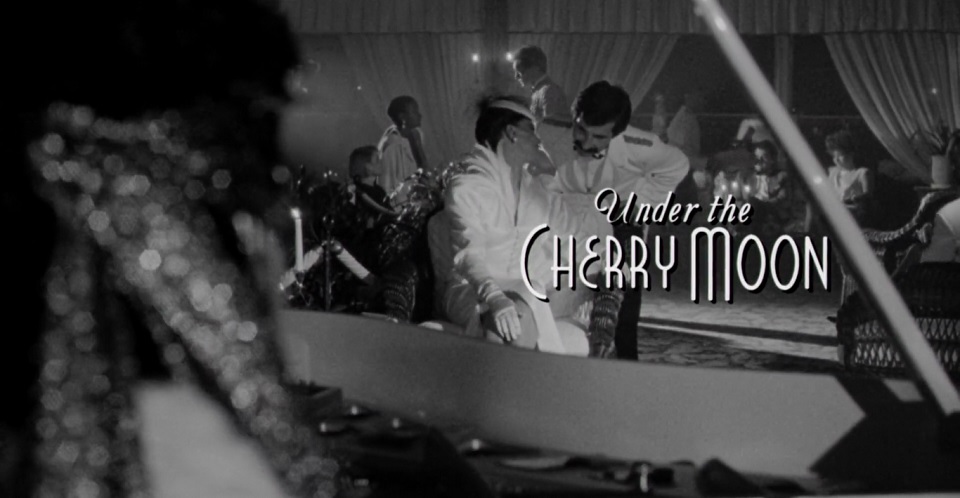
Do U Lie?: A Defense of "Under the Cherry Moon"


It's July 3, 2023. Tomorrow will be the national holiday "4th of July" in the states. Yesterday was July 2. That was the date that the film, Under the Cherry Moon was released in 1986, thirty-seven years ago to date. Thus, celebrating its 37th Anniversary since being released. This article is being written, to weigh in on the often harsh criticism of an '80s box office flop. The negatives and the positives will be evaluated.


The Negatives: What Went Wrong


Under the Cherry Moon was released, coming off the heels of Prince’s so called masterpiece Purple Rain. It was swiftly panned mostly for not being the sequel to Purple Rain, just as much as it was for being misunderstood. When it came time for awards given out for the worst films, Under the Cherry Moon walked away with five, including a tie with Howard the Duck for worst picture. A night of dissatisfaction at the 7th Annual Golden Raspberry Awards held at the legendary haunted Hollywood Roosevelt Hotel in March of 1987.
The film was also nominated for an award for "Worst Picture" at 1986's 9th Stinkers Bad Movie Awards.


Much like The Wiz did for Diana Ross and Michael Jackson's acting careers on the big screen, Under the Cherry Moon is more or less the movie that killed Prince’s viability as a screen icon. Prince definitely should have had more movie roles and been a bigger star in film that what he turned out to be. The potential was there.

After its failure, Prince seemed to lose interest in the filmmaking process, possibly because he found it difficult to reconcile his one-man-band approach to creating music with the filmmaking process in which countless of hands are required to help create even the most individual of visions.
In 1990, he finally gave everyone the “Purple Rain” sequel they had been clamoring for, but the result, Graffiti Bridge (1990), was uniquely nothing like its predecessor.

Sadly, Prince never acted in or directed a feature film again after Graffiti Bridge. Not counting any direct-to-video movies, television shows or concert films where he played "himself".

Under the Cherry Moon faced several challenges that contributed to its lackluster performance at the box office and mixed reception among audiences and critics. Here are a few factors that may have influenced its underwhelming performance:

  • 1. Prince's Unique Style: Prince was primarily known as a musician, and his foray into filmmaking with "Under the Cherry Moon" might have been seen as unconventional or unexpected. The film's stylized black-and-white cinematography and eccentric storytelling approach may not have resonated with mainstream audiences, who were more accustomed to traditional narrative structures at the time. This is what Warner Brothers was afraid of from the start. Thus it was agreed that the film would be shot on color stock but processed into black and white in post-production.

  • 2. Mixed Critical Reception: The film received predominantly negative reviews from critics upon its release. Some criticized the film's plot, viewing it as convoluted or lacking substance. Others found fault with Prince's acting and directorial choices. Negative reviews can significantly impact a film's success, as they can deter potential viewers from watching it.

  • 3. Limited Marketing and Distribution: The film's marketing campaign may not have effectively conveyed its unique appeal or reached its target audience. Additionally, the distribution strategy might not have been extensive enough to garner significant attention or attract a large number of viewers.

  • 4. Competition: "Under the Cherry Moon" was released during a competitive period at the box office, with other high-profile films capturing audiences' attention. Tough competition from other popular films can make it challenging for a smaller or niche film to gain traction and draw in audiences.

  • 5. Lack of Commercial Appeal: The film's artistic and unconventional nature may have limited its appeal to a broader audience. Its black-and-white cinematography and stylistic choices, while visually striking, might not have aligned with the mainstream taste at the time.

The Positives: What Went Right

The film marked Prince's directorial debut, who also wrote and starred in the movie. There's a positive. It also marks another debut, that of its female lead Kristin Scott Thomas in her feature film debut. There's another positive. Prince was always getting careers started and bringing new talent into the industry to work with him.

Thomas as Mary

Under the Cherry Moon is known for its stylized black-and-white cinematography, which gives the film a classic and timeless feel. Note that the film was shot in color. Like Dorothy stepping into Oz from her grey Kansas home, the audience never gets to see the true scale of the magnificent costume pieces worn by the cast as well as other interesting aspects of the film until glancing at still pictures and principle photography in full color. Aside from photographs, none of the color footage has yet emerged with the exception of the music videos for "Mountains" which is the same as the end credits sequence in the film but kept in its original colored format for the video version. Making the film even more magical.


Prince's music is also a significant contribution which makes the film great. With several original songs featured throughout, including the popular number one United States hit, "Kiss". The music adds an additional layer of emotional depth and enhances the romantic atmosphere of the story. The movies soundtrack album, Parade, sold over a million copies and achieved platinum status in the United States, United Kingdom, the Netherlands and in France.

Something else positive that came from the making of the film was that Prince gained a new musical collaborator. Jazz keyboardist/composer-arranger Clare Fischer, experienced his first of many recorded collaborations with Prince due to the film.

Parade was named one of the best albums of 1986 by The Village Voice and NME magazine, who named it their Album of the Year. Parade was released on March 31, 1986 to acclaim from music critics, who viewed it as a creative comeback after the critical disappointment of Around the World in a Day.


Although the film received mixed reviews upon its release, it has gained a cult following over the years, largely due to Prince's involvement and the unique blend of musical and cinematic elements with fans appreciating its unique aesthetic and Prince's creative vision.

Despite its initial reception, the film remains an interesting piece of Prince's artistic legacy and a representation of his creative vision beyond his musical endeavors.

The film's legacy itself has evolved beyond its initial reception, and it is now regarded as an intriguing part of Prince's artistic journey.

Conclusion


Overall regardless of anything negative anyone has to say about UTCM, it is a pretty decent film. It may not fit everyone's criteria for "the perfect film" but it is definitely worth a watch. It holds the audience to a solid viewing experience nonetheless. Especially for those who have never had the opportunity to see the film. In a lot of ways, it is better than Purple Rain. For sure Graffiti Bridge can't hold a candle to it. The film's contemporaneous negative reception had to have been due to people expecting it to resemble Purple Rain. The better option would be to have accepted this film for what it was and made educated remarks based off of that alone! With that being said the film shows considerable effort and that's why
 it's memorable and loved.

Check Out The Audio Companion of this article on our YouTube channel: https://youtu.be/q6M7y6vxh5g